Author: Philosophy

Mary’s Room

Understanding Mary’s Room Mary’s Room is a brain-teaser that philosophers use to learn about how we understand the world. It’s about a scientist named Mary who knows every scientific fact about colors but has never seen them. When she sees a color, like red, outside of her black-and-white world, the question is: does she learn something new? This puzzles us because if she knew ev... »
Chinese Room Paradox

What is the Chinese Room Paradox? The Chinese Room Paradox is a challenge to the idea that a computer can truly understand languages and have a mind like a human. Imagine you’re following a recipe—you can bake a cake by following the steps, but that doesn’t mean you understand the chemistry of baking. The paradox, created by philosopher John Searle, asks whether a computer could ever t... »

Trolley Problem

What is the Trolley Problem? The Trolley Problem is a question of ethics—the study of what is right and wrong. Picture a big, heavy trolley rolling quickly on train tracks. Ahead, there are five people tied up on the tracks who cannot move. The trolley will hit them if it stays on the same path. You are right next to a lever that can make the trolley switch to a different set of tracks, but there’... »

Schrödinger’s Cat

What is Schrödinger’s Cat? Schrödinger’s Cat is a famous idea that comes from the world of physics, a branch of science that deals with matter, energy, and the way they act on each other. Think about a cat that is inside a sealed box with a setup that can release poison based on a random event. Because we can’t see inside the box, we don’t know if the cat is alive or dead. ... »

Brain in a Vat

What is it? A Brain in a Vat is a thought experiment which asks you to imagine something really wild. Suppose a really smart scientist takes your brain out of your body and puts it into a container filled with a special liquid that keeps your brain alive. Your brain is hooked up to a super advanced computer which sends it electrical signals just like the ones you get from your senses when you are ... »

Ship of Theseus

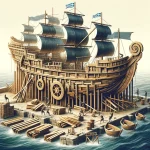
Ship of Theseus

What is the Ship of Theseus? The Ship of Theseus is a puzzle that makes us wonder about identity—what it means to be the same thing over time. Here’s one way to see it: say we have an old ship that was used by a hero named Theseus. This ship is now like a museum piece to celebrate his adventures. But as time goes by, the wooden parts start to rot, and people replace them, one by one, with ne... »

Law of Double Effect

Definition The Law of Double Effect is a philosophical idea that people use when making difficult choices. It’s like a guide telling us that sometimes, you can do something with mixed outcomes: some good, some not so good. For the Law of Double Effect to apply, the action must be one that is morally okay, or at least not bad. Also, you must be trying to do the good thing, not the bad one. If... »

Law of Ethical Egoism

Definition of Law Of Ethical Eegoism Ethical egoism is the idea that people should act in ways that are best for themselves. Imagine each person as the captain of their own ship. The captain’s first job is to keep their ship sailing smoothly. Ethical egoism is thinking that the best way for a captain to make sure all ships sail smoothly is for each one to focus on their own ship first. It... »

Law of Relativity

Definition of the Law of Relativity The Law of Relativity is a bit like looking at a picture that changes depending on where you stand. Imagine standing on one side of a sculpture and seeing a circle; as you walk around it, the shape seems to shift and change. This is how the Law of Relativity works in thinking and logic. It’s about understanding that what we take to be true or real can look... »

Law of Falsifiability

Definition The Law of Falsifiability is a rule that a famous thinker named Karl Popper came up with. In simple terms, for something to be called scientific, there must be a way to show it could be incorrect. Imagine you’re saying you have an invisible, noiseless, pet dragon in your room that no one can touch or see. If no one can test to see if the dragon is really there, then it’s not... »